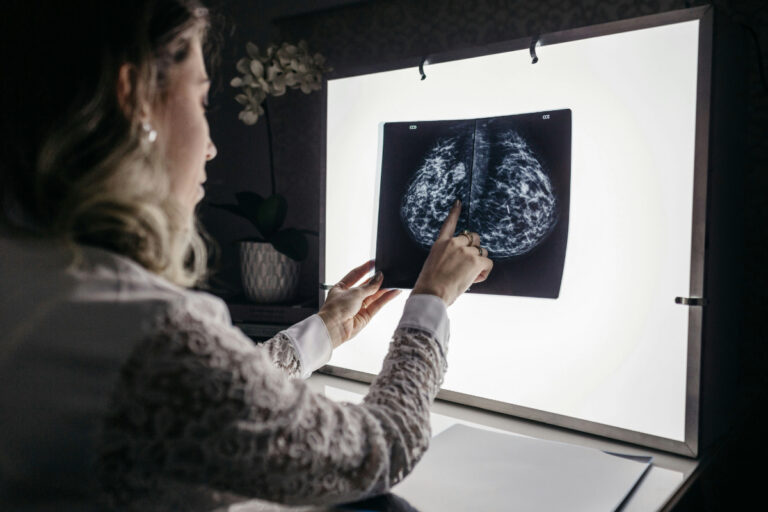



Nearly half of all women have dense breast tissue, yet most don't know it until they receive a screening result. This knowledge gap represents more than just missing information - it's a blind spot in cancer detection that affects millions of women worldwide and has sparked a wave of technological innovation aimed at solving mammography's fundamental limitations.
The stakes are significant. Dense breast tissue increases cancer risk by up to six times while simultaneously making cancers harder to detect on traditional mammograms.
Current screening methods miss approximately one-third of breast cancers in women with dense tissue, creating a paradox where the women at highest risk receive the least effective screening.
Now, a convergence of regulatory changes, investment activity, and technological breakthroughs is reshaping how the medical community approaches dense breast screening.
The Regulatory Catalyst
The landscape shifted in September 2024 when the FDA became the first global regulator to mandate breast density reporting for all screening mammograms.
This requirement addresses a long-standing information gap where women remained unaware of their breast density status and its implications for both cancer risk and screening effectiveness.
The European Society of Breast Imaging agrees with recommendations that women should be informed of their breast density, with personalized screening protocols provided for those with high density tissue.
These regulatory changes created both opportunity and pressure. Currently, 37% of mammography centers in the US remain non-compliant with American College of Radiology guidelines, potentially facing annual financial penalties ranging from $50,000 to $200,000 depending on patient volume.
New Technology Approaches Emerge
Investment and innovation activity has concentrated around three distinct technological approaches to address dense breast screening challenges.
Novel Biomarker Detection
The Blue Box, a Barcelona-based medtech company, recently closed a €3 million seed round to advance its urine-based breast cancer screening technology through clinical trials.
The company's approach analyzes volatile organic compounds in urine using proprietary AI algorithms, achieving 88% sensitivity in detecting breast cancer biomarkers—a significant improvement over mammography's performance in dense tissue.
"One of the biggest issues I could see was how frustrated gynecologists were about cancer detection," recalls co-founder Judit Giró. "There were so many women, even young women, with tumors that could have been treated, but it was too late by that time."
The breakthrough came from an unexpected source: Research showing that dogs could detect cancer by smell with 90% accuracy, leading Giró to develop an "electronic nose" that could replicate canine detection capabilities.
SpotitEarly, a company following a somewhat similar path, raised $20.3 million to launch its breath test technology in the US, combining trained canines and artificial intelligence to analyze volatile organic compounds in breath samples.
The company achieved 94% accuracy in clinical trials involving 1,400 individuals, with results published in Nature's Scientific Reports.
"Early detection can increase survival rates to as high as 99 percent and save billions in treatment costs," said Alon Lifshitz, Founding Partner at Hanaco Ventures, which led SpotitEarly's recent funding round.
AI Enhancement of Existing Imaging
DeepLook Medical has taken a different approach, developing DL Precise, the first FDA-cleared AI technology specifically designed to detect cancer in dense breast tissue.
The company announced the first close of its Series A funding round led by Xcellerant Ventures, supported by data showing a 12% improvement in recall rates at a major New York hospital.
"DL Precise marks a significant advancement in medical imaging technology," said Michael Shufeldt, Principal at Xcellerant Ventures. "We believe this technology has the potential to redefine how healthcare providers approach breast cancer detection, particularly in cases where clarity and precision are most needed."
The technology integrates directly into existing breast imaging workflows, providing point-of-care support to help radiologists detect cancers that might otherwise go unnoticed.
Alternative Imaging Technology
Sona, emerging from the UK's National Physical Laboratory, is developing the world's first ultrasound-based breast density assessment technology that requires neither imaging nor trained radiologists.
Unlike traditional methods that rely on X-rays and radiation exposure, Sona's patented solution leverages ultrasound sensor-platform technology to provide safer, more sensitive breast density assessments.
The company's simple, low-cost desktop device is designed for deployment in GP clinics and primary care sites, delivering quick, reliable breast density readings without the infrastructure requirements of traditional mammography.
Market Drivers Beyond Technology
The dense breast screening challenge extends beyond pure technology development to fundamental healthcare access and patient advocacy issues.>
Personal advocacy has become a significant driver of awareness and change. Women who have experienced delayed diagnosis due to dense breast tissue are increasingly speaking out about the need for better screening options and greater transparency about breast density status.
This advocacy pressure, combined with regulatory requirements and financial penalties for non-compliance, is creating market conditions that favor innovative screening solutions.
The financial implications alone are driving adoption. Healthcare systems face both the direct costs of non-compliance penalties and the indirect costs of managing high false-positive rates from traditional mammography.
"For every three women with breast cancer in screening programs, one will not be detected and sent home with cancer, and two will be recalled for further testing," explains The Blue Box's Giró. "However, of all women recalled for additional testing, only 1% actually have cancer."
Investment Patterns Signal Category Maturation
The funding landscape reflects both the urgency of the problem and the diversity of potential solutions.
Investment amounts range from early-stage rounds to substantial Series A funding, indicating investor confidence across different development stages.
Impact investors are particularly active in this space, recognizing both the significant unmet medical need and the potential for scalable solutions that could benefit millions of women globally.
Integration Challenges and Opportunities
Despite technological promise, each approach faces distinct integration challenges within existing healthcare systems.
Biomarker-based solutions must navigate regulatory approval pathways for novel diagnostic methods while demonstrating clinical utility compared to established screening protocols.
AI-enhanced imaging solutions benefit from integration with existing workflows but must prove their value proposition justifies additional technology costs and complexity.
Alternative imaging approaches like ultrasound-based density assessment offer radiation-free alternatives but require validation studies and provider training for widespread adoption.
The most successful solutions will likely be those that address not just the technical challenge of dense breast screening, but also the practical realities of healthcare system implementation, provider workflow integration, and patient accessibility.
Looking Ahead
The convergence of regulatory mandates, technological innovation, and patient advocacy suggests 2025 will be a pivotal year for dense breast screening solutions - in many ways it already is:
Clinical trials for multiple technologies are launching or completing, regulatory approvals are pending, and commercial deployments are beginning.
The ultimate measure of success won't be just technical performance metrics, but whether these innovations can actually improve outcomes for the nearly 50% of women whose dense breast tissue puts them at higher risk while making traditional screening less effective.
For an area of healthcare that has long relied on a one-size-fits-all approach, the emergence of multiple technological pathways offers hope for truly personalized breast cancer screening that matches detection methods to individual risk profiles and tissue characteristics.
The question is no longer whether better dense breast screening solutions will emerge, but which approaches will prove most effective at scale and how quickly they can be integrated into routine care.