

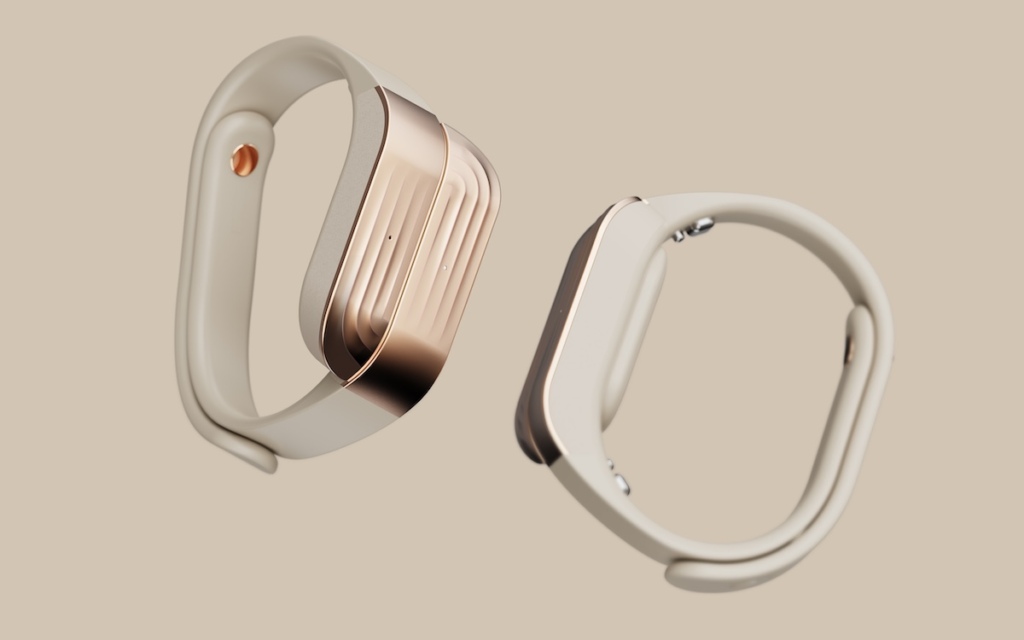
Clair Health has partnered with Mayo Clinic Platform_Accelerate to leverage de-identified clinical records and clinically validate its wrist-worn hormone monitor.
Women spend 25% more of their lives in poor health than men, but only 1% of research funding is dedicated to female-specific conditions beyond oncology. Clair aims to connect the dots between hormones and overall health, offering insights across fertility tracking and conception timing, conditions like PMOS and endometriosis, fitness training and recovery, and perimenopause. With a waitlist of more than 30,000 and a recent $11.6 million seed round, the company plans to launch its wearable in November.
Clair will access millions of longitudinal, de-identified clinical records, including women’s lab results, flowsheets, and clinical notes, alongside Mayo Clinic advisors and technical support for up to two years. The company will also run three-to-nine-month clinical studies testing the accuracy of its hormone and symptom recognition.
“Women often leave the doctor’s office feeling dismissed, not because their symptoms aren’t real, but because they don’t have the data to prove it,” said Jenny Duan, CEO and Co-Founder of Clair Health. “Clair is building the women’s health platform we’ve always needed, one that translates continuous hormone and symptom data into insights women and their clinicians can trust. Participating in Mayo Clinic Platform_Accelerate on a multi-year basis gives us the clinical depth and validation framework to turn a single hormone signal into real context, across every life stage.”
Clair aims to validate cycle phase classification, ovulation and fertile window prediction, anovulatory and irregular cycle detection, hormone-symptom pattern recognition, and the perimenopausal transition using its platform.
“A women’s health intelligence platform cannot be validated on a single cohort or a single season of data,” said Dr. Sara Vaughn, Chief Medical Officer of Clair Health. “Access to millions of longitudinal clinical records across years lets us validate our AI across the diversity of real-world hormonal and symptom patterns, including irregular cycles, PCOS, endometriosis, and the perimenopausal transition, and build a scientific foundation that generalizes far beyond any single study.”