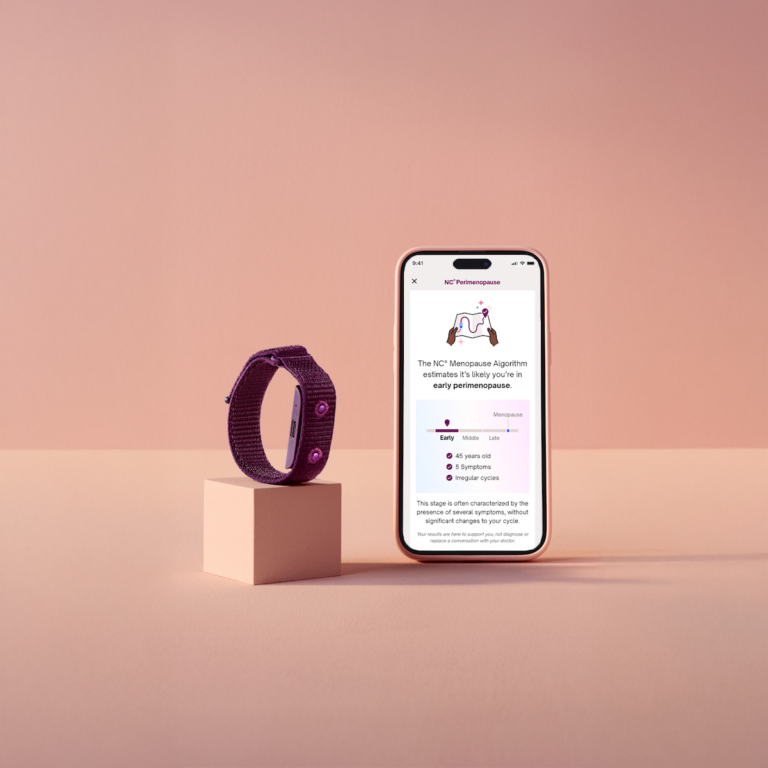
| I'll start with a short recap of what I've been up to over the past couple of days:Over the past couple of days, team Femtech Insider got together to talk operations. We discussed our backend infrastructure, and a big part of that is our database of women's health companies.I wrote about sleep health in this newsletter last week and then about heart health on Valentine's Day. #superromanticI've been starting to update our Femtech Insider editorial guidelines.These three seemingly unrelated things have led me to one question: If women's health has now evolved beyond classic women's health into a more holistic version that also includes areas like e.g. sleep or heart health, how do we evolve as a media company covering the field? What is and isn't a women's health company? And how do we track and categorize companies both in our editorial work, and also in our backend databases? I'd like to discuss this in this newsletter today, and while I may not have a full answer yet, I'd love to share my thoughts with you. Maybe also in hopes that some of you have views on this and can help me evolve my thinking. So here it goes... When I started Femtech Insider 5 years ago, we used the Women's Health Innovation Coalition's definition to give us orientation of the space: "Innovative solutions to address unmet needs in diseases, conditions, and indications that solely, predominantly, or differently impact the health of women." While this is an already pretty holistic definition, the companies we were talking about at the time mostly fell into the "solely" category. I think this has changed (for the better IMHO!) The conversation is evolving from "women's health" to "the health of women" - with growing attention to conditions that predominantly or differently impact women beyond reproductive health. Consider cardiovascular health for example: While companies like Hello Heart serve all genders, they're developing specific features for women's health - addressing the fact that cardiovascular disease causes 1 in 3 deaths among women yearly, and that women's heart attack symptoms often go unrecognized. Similarly, in sleep health, we're seeing companies like Oura integrate menstrual cycle tracking and develop features specifically for women's health-related sleep issues (e.g. perimenopause). This evolution raises some important questions for us at Femtech Insider (and probably many others in our industry as well):Should we track individual features targeted at women's health, even within broader health solutions? (My gut feeling is: Yes)How do we cover companies that serve all genders but develop significant women-specific features? And how do we differentiate? (Figuring this out...)And how do we evaluate and track the impact of companies making meaningful contributions to women's health through research or targeted solutions?If we want to continue to cover the space holistically at Femtech Insider, I believe we need to find answers to these questions.And we've started to explore various approaches, from spectrum-based categorization to tracking both company-level and feature-level innovations. Is this a lot of work? Yes. Are we a small organization? Also yes. So the challenge for me right now, putting on my "former product manager hat," is to figure out how we can build an operationally achievable and scalable framework here. I strongly believe that we need to evolve alongside our industry and understanding of women's health - beyond reproductive health to encompass the full spectrum of health needs that impact women.How exactly that will happen? Well. As you can tell: I'm not 100% sure yet, but I can promise you: I'm determined to figure it out. |



Copyright © 2026 Fitt. All rights reserved. Privacy Policy. Terms and Conditions.