



A new report from the United Nations Economic and Social Commission for Asia and the Pacific (UN ESCAP) in collaboration with Femtech Association Asia has mapped the femtech landscape across South-East Asia, identifying 111 companies in the region and finding that despite rapid growth, significant funding and awareness gaps persist.
The report, titled “Femtech in South-East Asia: Unlocking Innovation for Women’s Health,” focuses on five countries – Indonesia, the Philippines, Singapore, Thailand, and Vietnam – which account for 93 of those companies.
Consumer spending on femtech in South-East Asia reached $6 billion (approximately €5.5 billion) in 2024, with 58% of women in the region currently using femtech products or services. Menstrual care products and period tracking apps are the most commonly used categories.
The global femtech market was valued at $55.86 billion in 2024 and is projected to reach $130 billion by 2034. However, only 21% of femtech companies in South-East Asia have secured external funding through grants, angel investment, or venture capital. Of the $32.9 million invested in femtech across the five focus countries between 2019 and 2024, 96% went to Singapore-headquartered companies.
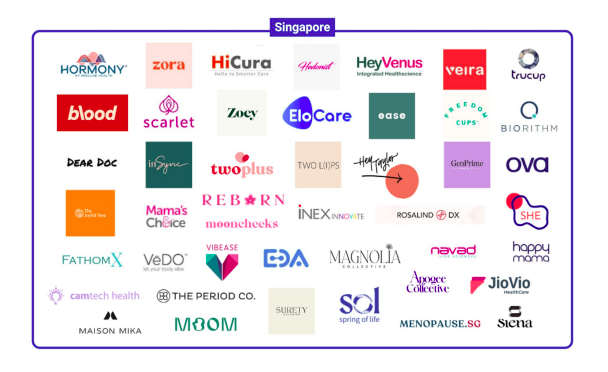
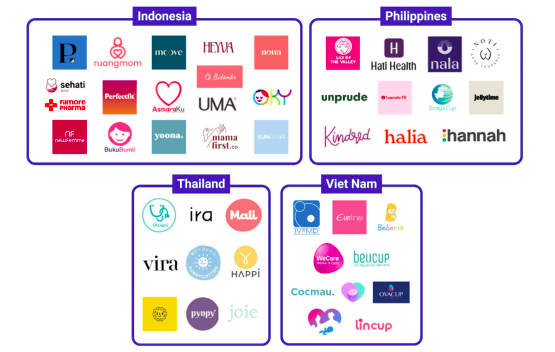
The report attributes the funding gap to gender bias in investment ecosystems, limited investor understanding of women’s health, and the sector’s relative newness. “Many male investors likely do not understand the wide range and variety of women’s health issues and women’s health throughout different life stages,” the report states. “Despite women making up half of the population, many investors, sadly, still consider women’s health a niche market.”
Awareness also remains a barrier to adoption. According to survey data cited in the report, 43% of non-users cite lack of awareness as the main reason for not using femtech products. Only 25% of women consumers in South-East Asia are familiar with the term “femtech.”
Social media censorship poses additional challenges. The report notes that one in three women in South-East Asia consults social media for women’s health information, yet femtech content is regularly blocked on platforms operated by Meta and TikTok. “Founders often report having to wait for months to get their sites reinstated after a ban,” according to the report.
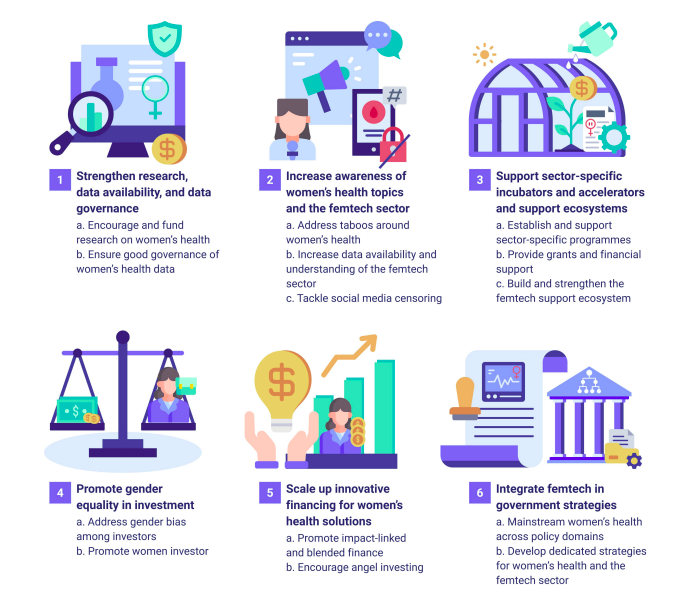
The report outlines six strategic recommendations: strengthening research and data governance, increasing awareness of women’s health topics, supporting sector-specific accelerators, promoting gender equality in investment, scaling up innovative financing, and integrating femtech into government strategies.
More than 75% of femtech companies in South-East Asia were founded between 2019 and 2024. The number of startups in the five focus countries has grown from 39 in 2021 to 93 in 2024.


