


Last week, I sat down with Sally Mueller and Michelle Jacobs, the founders of Womaness, expecting to write a typical retail expansion story. Instead, I got a masterclass in category creation that's been haunting my thoughts ever since.
As Mueller walked me through their four-year journey - from scattered Target test placements to Ulta's wellness wall to Walmart's comprehensive rollout - one phrase kept echoing: "Women want to shop solutions not products."
It seemed so obvious once she said it. Of course women don't want menopause products scattered across skincare, supplements, and intimate care aisles. Of course they want to see the full scope of symptoms and solutions in one place. Of course traditional retail categories don't match how women actually experience health challenges.
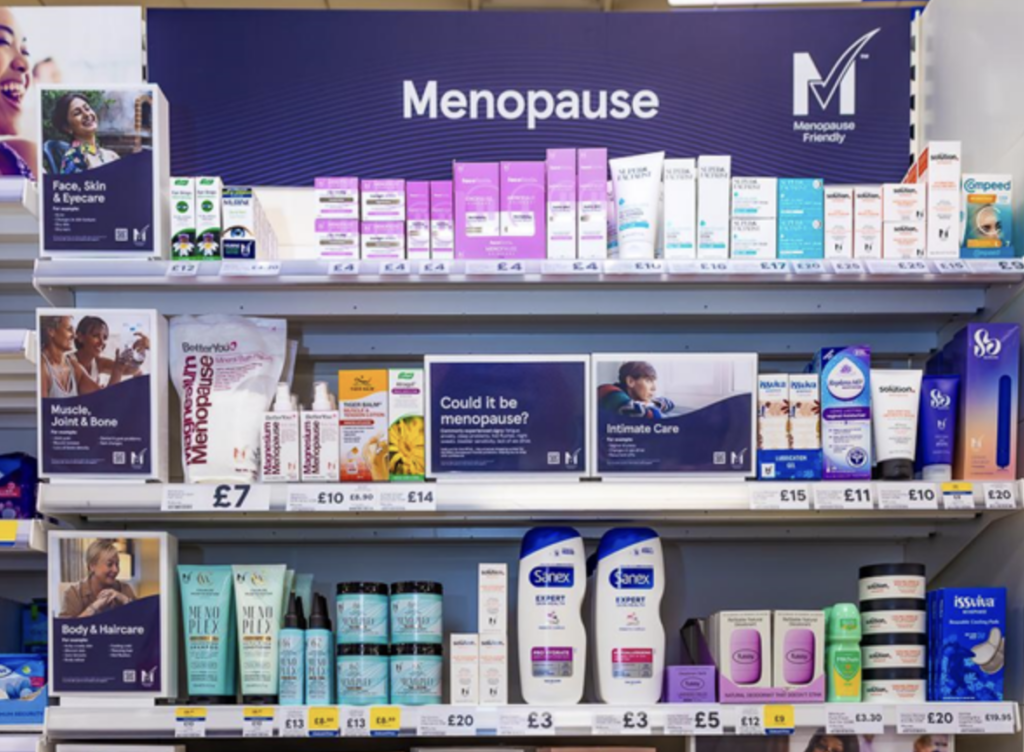
It also reminded me of Tesco's permanent menopause bays rolling out across 93 UK stores, which I'd written about a few weeks ago. Same insight. Same solution-oriented approach. Same recognition that 87% of menopausal women feel underserved by current retail experiences.
That's when it clicked for me: This wasn't actually just about retail merchandising. This was about something much bigger.
The Pattern Emerges
Over the past year of research and consulting work, I've been seeing variations of this same transformation everywhere:
Perrigo spending 100 hours in conversation with women across three countries - not to validate product features, but to understand lived experiences. Their new Women's Health organization doesn't lead with their oral contraceptive pipeline; it leads with championing women's right to determine their own health journeys. (Link)
CVS Health becoming the first U.S. employer with Menopause Friendly Accreditation, eliminating the "pink tax," and addressing period parity—moves that span employment, retail, and clinical care because that's how women actually experience health. (Link)
Bayer redesigning their entire innovation approach around "the whole person in mind," acknowledging that women's needs vary dramatically across cultures and life stages, requiring adaptable technology platforms rather than one-size-fits-all products. (Link)
Each story felt different in isolation. Together, however, they reveal something pretty profound: We're witnessing a fundamental shift from product-centric to human-centric health organizations.
What This Pivot Actually Looks Like
The difference isn't semantic - it shows up in every business decision:
Product-Centric Question: "We have a menopause supplement. Where should we place it in stores?"
Human-Centric Question: "Women experiencing menopause face 48 interconnected symptoms. How do we help them understand and navigate this entire journey?"
Product-Centric Organization: R&D develops features → Marketing crafts messages → Sales distributes products
Human-Centric Organization: Cross-functional teams organize around customer journeys, integrating everything from product development to retail experience to ongoing support
Product-Centric Success: Units sold, market share, profit margins
Human-Centric Success: Education impact, community building, long-term relationship health, and yes—sustainable business growth
Why Small Companies and Startups Are Leading
Here's what's fascinating: The most innovative examples are coming from smaller, more agile organizations. Womaness could reimagine retail categories because they weren't constrained by existing product lines.
These smaller companies are proving the concept, and now larger organizations are scrambling to adapt.
Mueller's insight about organizational alignment is crucial: "Success depends on leadership support that extends from decision-makers down to the teams responsible for planogram execution." It's not enough to change your marketing message - you need to reorganize how your entire company thinks and operates.
The Competitive Advantage
Companies making this shift aren't just being altruistic - they're gaining sustainable competitive advantages that product-centric competitors can't match:
Trust at Scale: When you authentically champion women's health journeys rather than just selling products, you build trust that transcends individual purchases.
Category Creation: Like Womaness, you don't just compete within existing categories - you create entirely new ones organized around human needs.
Ecosystem Positioning: You become a platform for women's health journeys, not just a vendor of health products.
Applying This to Your Organization
Whether you're leading a women's health startup or transforming an enterprise, here's how you could start to audit your own position on this spectrum:
The Product-Centric Reality Check
- Do your team meetings start with product features or human needs?
- Are your departments organized around what you make or whom you serve?
- When customers contact you, do they get product troubleshooting or journey guidance?
- Do your success metrics measure product performance only or also human outcomes?
The Human-Centric Transformation
Start with Deep Listening: Perrigo's 100-hour conversation investment wasn't just market research - it was relationship building and the beginning of a conversation. Create ongoing feedback loops that treat customers as co-creators. (Startups are *really* good at this)
Map Complete Journeys: Chart the full spectrum of your customers' experiences, not just moments they interact with your products. The gaps between touchpoints often reveal the biggest opportunities.
Reorganize Around Outcomes: Align teams, incentives, and metrics around the human outcomes you're trying to enable, not just the products you're trying to sell.
Build Solution Ecosystems: Follow Tesco's lead in organizing offerings around how customers actually think about their challenges, even if it means breaking traditional category boundaries.
The Transformation is Already Happening
The companies succeeding in this shift share a recognition that women's health isn't a market segment to capture - right now it's a movement to join. They're shifting from "How do we get women to choose our products?" to "How do we help women succeed in their health journeys?"
I think what struck me most about the Womaness conversation wasn't their specific retail strategy - it was how naturally they talked about women's experiences first, business mechanics second. That orientation is becoming a competitive advantage.
As I've thought more about this pattern, I realize we're at an inflection point. The companies that figure out human-centric organization first will define the next decade of women's health. Those that don't will find themselves competing on product features in categories their more agile competitors are already transcending.
The question isn't whether this shift will happen - it's already happening. The question is whether your organization will lead it or follow it.
So my question to you today: What's YOUR next move?


