


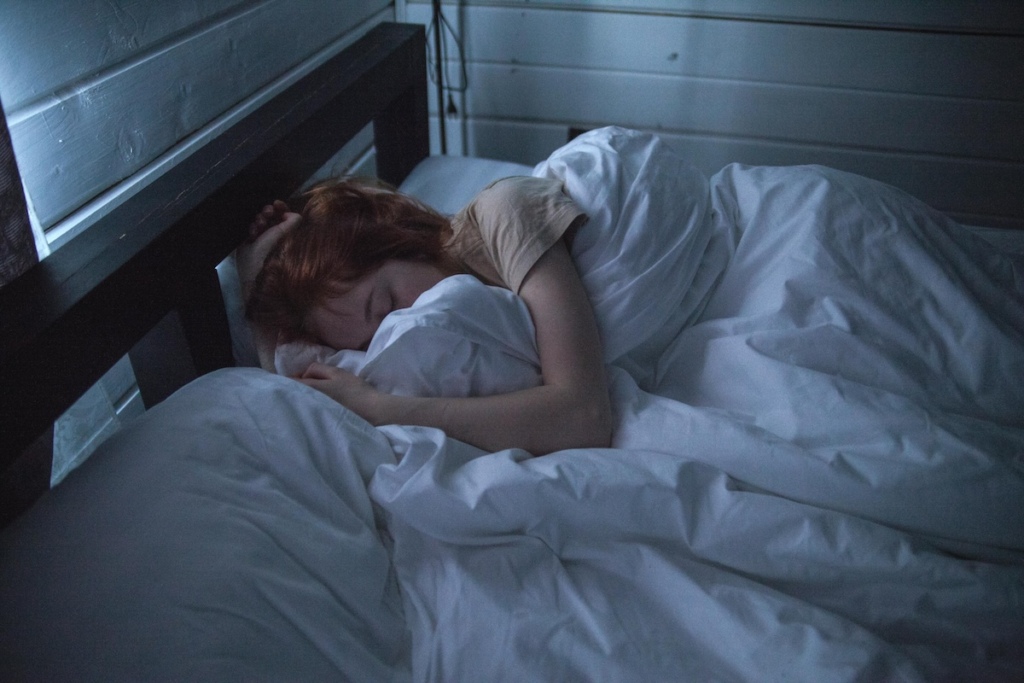
Over the past few weeks, we've received a noticeable uptick in pitches about women's sleep. A new audio course designed specifically for how women experience sleep. A sleep tech company wanting to talk about temperature regulation during pregnancy. Products targeting menopausal sleep disruption. What was once a gender-neutral category - same research, same advice, same products for everyone - is suddenly differentiating for women. And it's happening quickly.
The timing isn't accidental. Sleep is one of the clearest examples of a category where women's biology creates fundamentally different needs - and the data is now making that impossible to ignore.
Why Women's Sleep Is Different
Women are 58% more likely to experience insomnia than men. They report worse sleep quality despite getting slightly more total sleep. And the disparity begins at puberty - before that, sleep patterns between boys and girls are essentially identical. What changes is hormones.
This is the key point: Women's sleep is shaped by hormonal fluctuations that occur across the entire lifecycle, not just at one stage. During the menstrual cycle, progesterone drops in the late luteal phase and disrupts sleep in the 2 weeks before a period. During pregnancy, temperature regulation shifts measurably - Eight Sleep's data from 45,000 nights shows that by the third trimester, women consistently set their sleep environment approximately 3°F cooler than before pregnancy. During perimenopause and menopause, estrogen decline degrades sleep quality significantly - Oura's analysis of data from over 100,000 users found that women lose up to 2 hours of sleep per week as they transition through perimenopause to postmenopause. And hot flashes, which affect up to 80% of menopausal women, directly disrupt sleep throughout the night.
Then there's the layer that isn't strictly biological but is deeply gendered: Women carry a disproportionate share of caregiving and domestic labor. They're more likely to be the ones waking with a baby, managing a parent's health, or lying awake processing the mental load of running a household. Sleep research has historically treated these as lifestyle factors rather than systematic determinants of women's sleep health. They are both.
What's Happening Now
What's interesting about the current wave of activity is that much of it is being driven by sleep and wearable companies that started as general-purpose platforms and found their way to women's health through their own data.
Oura started as a sleep company, but sleep data became the foundation for something much broader. Women now make up 59% of its user base. Over the past 2 years, the company has layered period prediction, cycle insights, fertile window tracking, pregnancy insights, and perimenopause-specific tags on top of its core sleep and biometric tracking. In February it launched its first proprietary AI model dedicated to women's health. Sleep was the entry point - but what Oura is building now is a continuous biometric profile that reflects hormonal changes across a woman's entire life.
Eight Sleep has gone from tracking to active intervention. Its Hot Flash Mode uses AI-driven cooling during menopause (clinical data: 55% fewer hot flashes), and its new Pregnancy Mode automatically adjusts temperature week by week throughout pregnancy and up to 24 weeks postpartum, based on 45,000 nights of data.
On the women's health side, Bonafide launched Noctera, a hormone-free, melatonin-free supplement targeting menopausal sleep disruption specifically. In a randomized controlled trial, 88% of participants moved to normal sleep within 3 weeks, gaining an average of 40 minutes per night. And BetterSleep just launched a 7-day women's sleep course designed around hormonal shifts, postpartum recovery, and mental load burnout - the realities mainstream sleep advice has largely ignored.
Data as the Driver
There's an important pattern here. For companies like Oura and Eight Sleep, the shift toward women's sleep wasn't driven by a corporate strategy to "enter women's health." It was driven by data. Oura saw women becoming the majority of its users and their data revealing cycle-linked sleep patterns that the product wasn't addressing. Eight Sleep saw temperature preference data that mapped directly onto pregnancy stages. These are general-purpose platforms discovering - through their own data - that women's biology demands differentiated products.
Meanwhile, women's health companies like Bonafide are approaching it from the other direction - starting with the biology and building sleep solutions around it. The convergence is the interesting part. When both sleep companies and women's health companies arrive at the same conclusion - that women's sleep needs to be treated as physiologically distinct - it's no longer a niche insight. It's a market reality.
What This Signals
Sleep sits at the intersection of several trends we've been tracking. The shift from tracking to diagnostics - Oura's perimenopause data isn't just tracking sleep, it's identifying a clinically significant deterioration tied to hormonal transition. The rebundling of care across life stages - Eight Sleep's pregnancy and menopause features treat sleep as a continuous physiological thread rather than an isolated health concern. And the broader recognition that women's health isn't a niche but a lens through which to understand health more broadly.
But it also raises a question worth watching. When the sleep industry discovers women's biology, does the resulting innovation flow back into women's healthcare - informing clinical decision-making, improving screening, generating publishable research? Or does it stay in the consumer wellness lane, useful but ultimately disconnected from the clinical system? Oura's perimenopause data showing 2 hours of sleep loss per week, for instance, is the kind of finding that should inform how clinicians counsel women entering perimenopause. Whether it does is a different question entirely.
For now, the direction is clear. Sleep is catching up to what women's health researchers have known for decades: Women don't sleep differently because of lifestyle alone. They sleep differently because of biology. And the products, the research, and the clinical advice are finally starting to reflect that.


