



Every Monday we share a quick “best of” from the week that was in the world of women’s health innovation with our Inner Circle members. What’s trending in the Femtech Insider community and beyond? Read on!
#Trending
👉 Tia's $100M Series B
Without doubt the big - and much debated news - in the femtech world last week was Tia's $100M Series B. Tia is a U.S.-based virtual-first holistic women's health clinic with brick-and-mortar locations in New York, Los Angeles and Phoenix. The company started as a women's health Q&A app, pivoted to in-person care and changed its model when the pandemic struck last year to also offer virtual care. With this new round of funding led by Lone Pine Capital the company now wants to scale its model to more than 100.000 women by 2023. #recap
Following the news a lot of interesting discussion and a pitch deck emerged and of course we want to share these findings with you.
Business Insider got their hands on the pitch deck Tia used to raise its latest round.
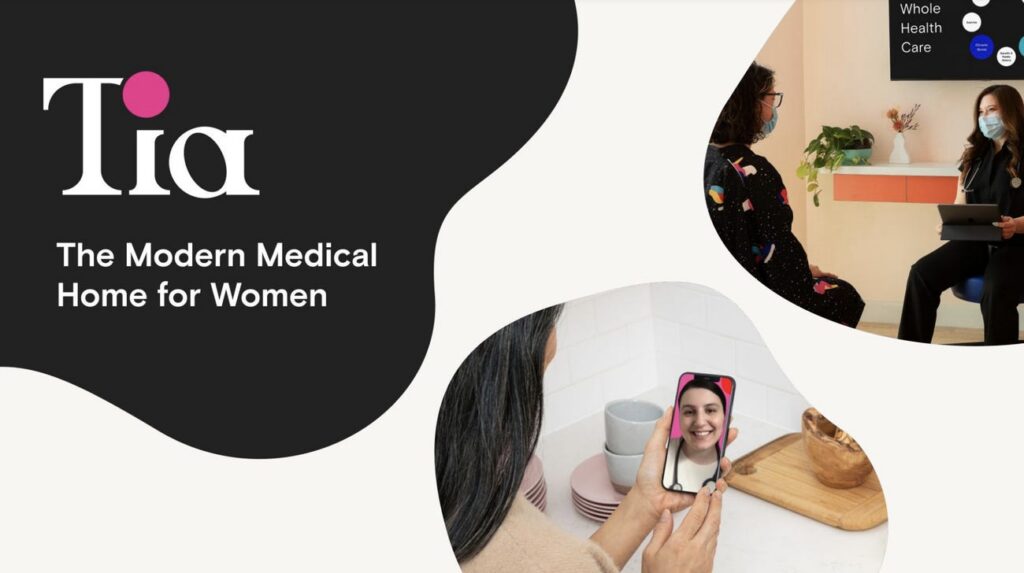
Quoting from Business Insider's article: "It's different from how the world saw Tia a year ago," Witte said of the growth and interest in women's health. Previously, Witte said, many people saw women's health as a niche area of healthcare.
One perspective on the raise we want to share with you is one shared in the Health Tech Nerds community:
Tia, a women's health startup, announced that it raised $100 million this week from one of the Tiger Cub hedge funds, Lone Pine Capital. I've been a fan of Tia's approach for a while - starting as a digital only service, then pivoting to build bricks-and-mortar clinics, and then partnering with a health system has struck me as a really intelligent approach to building a business in the space. But I am not sure what to think of this funding for a company that still seems to be figuring out the specifics of its model. Tia currently operates three primary care clinics and has one health system partnership with CommonSpirit, which is oddly absent from the funding announcement given the recent press about the relationship. The funding press release and deck shed light on specifics of how it intends to grow. On the one hand, this funding clearly is a bet that Tia can own the "front door" healthcare for women, which given the current market seems like a reasonable concept to be very bullish on as an investor. On the other hand, this is a crazy amount of money for a company that has built three primary care clinics (+ a virtual clinic infrastructure) and is likely providing healthcare services for a few thousand women in this country. Lone Pine Capital appears to be leaning into the Tiger approach to investing: if you think the winner in the women's health space is going to be a multi-billion dollar company in the next 5 - 10 years, and you think Tia has the opportunity to be that, you don't really care about how silly the specifics of the investment are today - you just plow enough money in for them to scale and be the winner. I suppose that makes certain amount of sense in a YOLO kind of way, but I scratch my head wondering how this is going to play out over the coming decades in this country. When you've got for-profit investors subsidizing the build out of a new care delivery infrastructure like this, what does the world look like when they decide they want to start reaping a return on that investment? These are sophisticated investors we're talking about here who are going to want to see growth / returns.
Interesting question to reflect on. #publichealth
#Following
👉 DTC on Fire
BeautyMatter released its Q2 Beauty Investment + M&A Transactions report and clearly DTC is on fire and starting to get attention and support aka $$$ from beyond the VC & PE world:
The proliferation of incubators and brand/product development platforms and the growth of e-commerce and D2C channels have lowered the barrier to entry and speed to market for new beauty brands. There has also never been more access to capital outside of venture capital and private equity. Nontraditional investors have become an ingrained part of the venture ecosystem. We have seen a shift among start-ups eschewing the venture capital funding formula, tapping less dilutive ways to fund their growth with more debt and revenue-based financing. One thing is certain—the beauty and wellness category is witnessing tremendous innovation that is certain to fuel interest in the sector.
And in case you're curious: BeautyMatter's "deal of the quarter" was Unilever's acquisition of Paula's Choice.
👉 What Consumers Want from Virtual Care
Advisory Board has surveyed 7.000 consumers and asked them just that! The key findings:
- Consumers look to telehealth to solve traditional problems of access and convenience
- Patients are impatient
- Patients want virtual care from their own clinicians (B2B Saas, anyone?)
Health care delivery changed significantly in 2020 to adapt to the Covid-19 pandemic. And while the capabilities and adoption of telehealth have come a long way, we’ve yet to tap its full potential.
You can read the summary and download the full report here.