


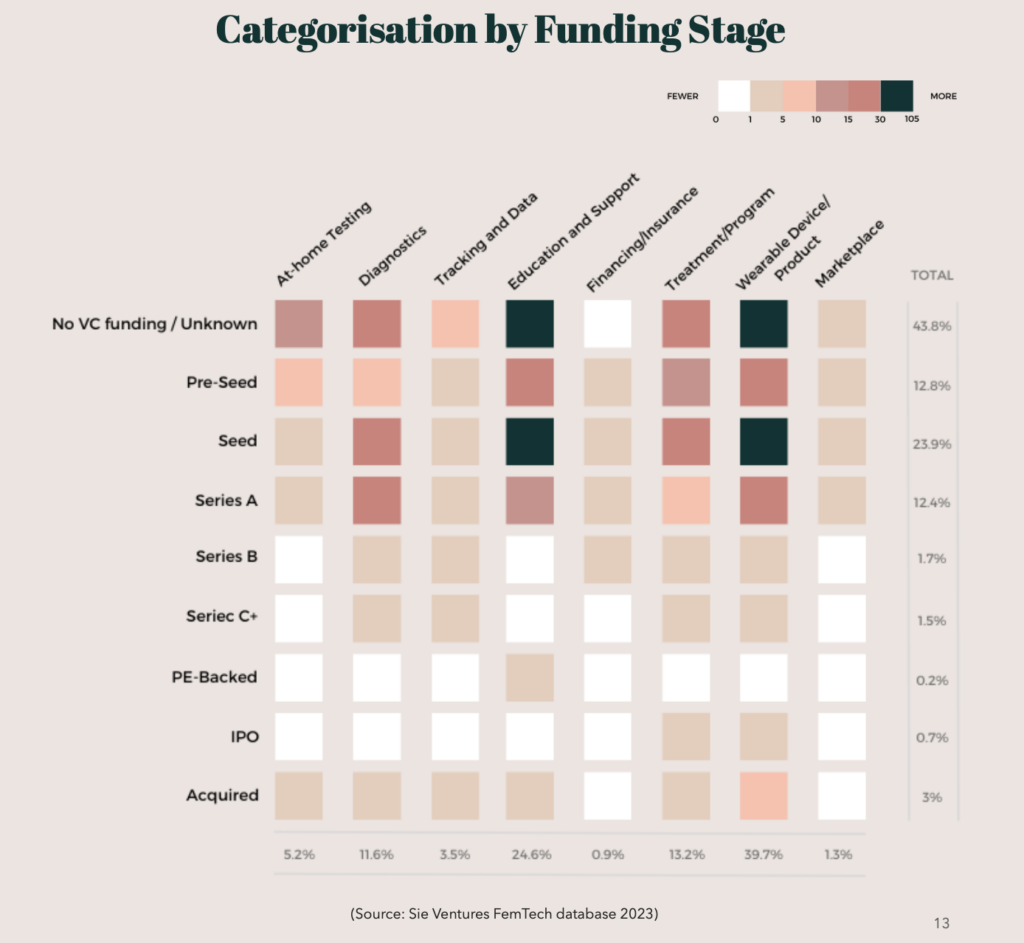
Last week Sie Ventures released a new report sharing insights into the European femtech landscape.
You can download the report for free or read our brief Femtech Insider recap.
The report overall forecasts the sector to grow to a staggering $35 billion by 2032, painting a picture of an industry with lots of potential. And while this is clearly an exciting outlook, if we are to take a closer look, analysis reveals that the reality unfortunately might be more nuanced.
Despite being dubbed 'nascent' by many including the authors of the recently released report, the European femtech ecosystem (and possibly even the global one) may actually be struggling under its own ambitions, struggling with fundamental growth and scaling challenges that go beyond mere youth.
Challenging the "Nascent" Narrative
In recent months the characterization of the femtech sector as nascent often overshadows the substantial challenges it faces. The persistent issues with funding and scaling suggest a more troubling reality—a sector not merely young and undeveloped but struggling to mature in a sustainable way.
The Sie Ventures report yet again underscores a cycle of inadequate funding and unsatisfactory exits that currently hold the sector back. Many European startups secure less capital compared to their US counterparts, often culminating in exits that do not demonstrate the long-term viability of the startups involved. These exits—frequently in the form of acquihires, technology purchases, or expansions by larger companies—may bring immediate financial returns but fail to establish a sustainable business model or encourage further investment in the sector.
This pattern suggests a systemic deficiency: a lack of foundational support and capital investment that would allow startups to scale effectively and operate independently. As such, it is not just a matter of the ecosystem being young but rather one that lacks the necessary structures to support growth to later stages.
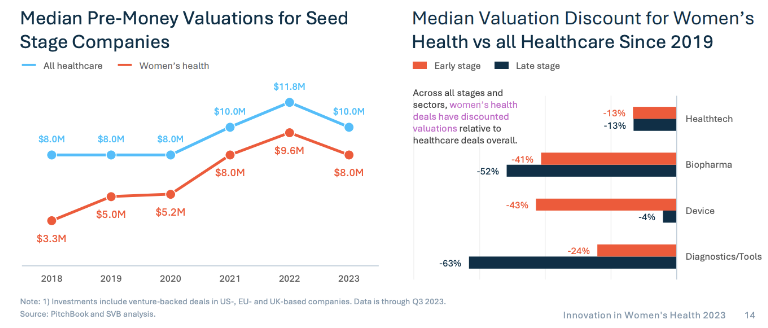
This thesis is also reinforced by findings from a recent SVB report that analyzed the women’s health ecosystem. The report highlighted significant discrepancies in the valuations of women’s health startups compared to those in the broader healthcare sector. Such disparities not only reflect the challenges of undercapitalization but also underline the market’s undervaluation of women’s health innovations, further complicating the path to securing adequate funding and achieving sustainable growth.
The struggle within the women’s health ecosystem stems not from a lack of innovation but often from significant undercapitalization in the early stages. This early-stage funding shortfall prevents startups from developing robustly enough to attract further investment or reach significant milestones.
What’s needed now is a fundamental shift in how startups are funded, guided, and scaled. By fostering a more supportive and financially robust ecosystem, there is potential not only to mature the sector but to transform it into a real force capable of significant global impact. It is now time to look beyond the surface of high growth forecasts and address the underlying challenges. What’s needed is a commitment to deep, structural changes, heralding a new era for the sector that could define its trajectory for decades to come.
Actionable Points for Driving Growth in the Femtech Sector
So what can be done? Below are a few suggestions. And yes. All of these are unfortunately much easier said than done.
- Larger Funds: There is a critical need for larger investment funds that understand the sector and can lead later-stage funding rounds.
- Enhanced Ecosystem Support: Beyond financial investment, startups require a robust support system that includes mentorship, market access strategies, regulatory and clinical guidance. High quality incubators and accelerators tailored specifically to the women’s health sector could provide this much-needed support.
- Focused Women’s Health Innovation Grants: Governments and private foundations should consider establishing grants that specifically target areas of women's health that are underfunded. First steps in this direction are being taken, which is encouraging.
- Public Awareness and Advocacy: Increasing public awareness about the potential of innovation in women’s health and the unique challenges faced by women’s health startups can create a more favorable environment for investment and adoption. Advocacy can also lead to policy changes that streamline the path to market for new innovations.
All of this to say: It's time for action. Stakeholders in the femtech ecosystem can now help to create a more conducive environment for the growth and success of startups, ultimately leading to a sector that is not only mature but also robust enough to make a significant impact on global women's health.