

Osteoboost Health has closed an $8 million financing round to scale manufacturing, expand clinical research, and broaden commercial reach for its FDA-cleared prescription wearable for low bone density. The round was led by Ambit Health Ventures, with participation from new investors including Emmeline Ventures and Disrupt Health Impact Fund, as well as existing investors Esplanade Ventures and Portfolia.
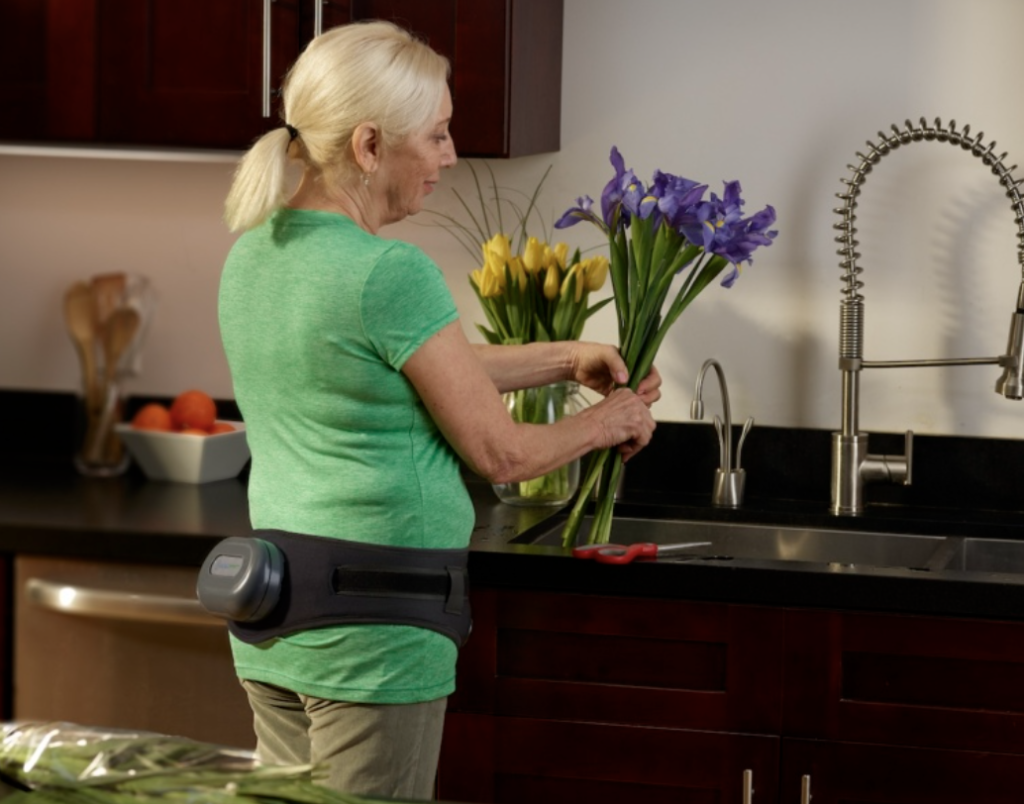
Osteoboost is an FDA-cleared, non-drug treatment clinically proven to treat low bone density in postmenopausal women with osteopenia – the precursor to osteoporosis. Worn low around the hips and over the sacrum, the device delivers targeted, low-magnitude vibration therapy to the lumbar spine and hips, inspired by NASA-funded research. A double-blinded clinical trial at the University of Nebraska Medical Center found that patients who used the device three or more times per week slowed bone density loss by 85% in the spine and 55% in the hips over 12 months.
The scale of need is significant: nearly 10 million Americans have osteoporosis and another 44 million live with low bone density, yet there are no approved drug therapies for osteopenia. For women entering menopause, when bone loss accelerates rapidly, options have been limited to calcium, vitamin D, and exercise.
“The cost of osteoporosis to society is enormous, but this is not a condition that begins at diagnosis. It develops silently over many years,” said CEO Laura Yecies. “That’s why earlier intervention and prevention are so critical, especially for women entering menopause – when bone loss is known to accelerate. This funding advances Osteoboost’s vision of building a complete bone health solution and changing the trajectory of bone health for millions.”
“For years, when a patient with osteopenia asked what they could do beyond calcium, vitamin D, and exercise, we didn’t have much to offer,” said David B. Karpf, an endocrinologist and attending physician in the Osteoporosis & Metabolic Bone Disease Clinic at Stanford University School of Medicine. “Many of the women I treat are younger peri- and post-menopausal women who have osteopenia, and want to do everything they can to prevent developing osteoporosis, in order to stay strong enough to travel, exercise, and lift their grandchildren. But there are no approved drug therapies for osteopenia. This gap between diagnosis and drug therapy has been frustrating. The availability of the FDA-approved Osteoboost device provides a clinically supported, non-drug option that allows us to intervene earlier.”
“At Emmeline, we invest in companies tackling the biggest unmet needs in women’s health,” said co-founder and general partner Azin Radsan van Alebeek. “Half of women over 50 will experience a fracture due to bone loss, yet osteoporosis remains dramatically underdiagnosed and undertreated. Laura and the Osteoboost team are bringing much-needed innovation to bone health, and we’re excited to support their mission.”
Since devices began shipping last May, more than 2,500 physicians have prescribed Osteoboost, including clinical professionals at more than 30 leading academic medical centers. The device received FDA Breakthrough Device designation in 2024 and was cleared through the De Novo pathway.
Osteoboost also offers Wellen by Osteoboost, an online physical therapy training platform for people with osteoporosis. In a study of 680 participants, Wellen users improved lower-body strength by 22.8% after one 18-session series, and nearly 80% of those who began at elevated fall risk improved to average or above-average levels.