



Origin, a pelvic floor physical therapy and women’s musculoskeletal health company, has raised a Series B round led by SJF Ventures with participation from Blue Venture Fund and Gratitude Railroad. Angel investors include Modern Fertility founder Afton Vechery, wellness entrepreneur Hannah Bronfman, and Spring Fertility founder Peter Klatsky. The company did not disclose the size of the round.
Origin offers both virtual and in-person pelvic floor physical therapy across the US. The company has treated over 50,000 patients since launching in 2020 and has insurance partnerships covering 50 million lives.
“Pelvic floor physical therapy is the standard of care,” said Carine Carmy, co-founder and CEO of Origin. “The data is clear – this effective, non-invasive therapy is the first line of treatment for dozens of women’s health issues, from postpartum recovery to incontinence. We’ve shifted pelvic floor therapy from niche to norm. This new round of funding will enable us to move it from norm to non-negotiable.”
Building Origin
Carmy started working on Origin in 2018 after her own experience with pelvic pain. She had lived with painful sex for nearly a decade, going through biopsies and other interventions without a diagnosis. When she finally saw a pelvic floor therapist, her symptoms resolved in two months.
“In my first session, there was a name for what was going on in my body,” Carmy said. “And in two months, after 10 years, it was gone, and it has not recurred.”
Carmy founded the company with Nona Farahnik Yadegar and David Yadegar, launching in 2020 during the pandemic. At the time, about 80% of pelvic floor therapy in the US was cash pay, costing patients $200-300 per visit – and virtual PT was not yet covered by insurance.
“When we launched in 2020, virtual care was not feasible from a reimbursement standpoint,” Carmy said. “So the first chapter of our growth was really expanding our clinic footprint.”
The company now has 19 clinics across seven US states. In 2023, Origin launched virtual care nationwide after several years of piloting to ensure clinical outcomes were at parity with in-person visits. Virtual care is now the company’s fastest-growing segment, up 100% year over year.

Origin has flipped the cash-pay model – 95% of the care the company administers is in-network, and most patients pay less than $36 out of pocket per visit. The team has grown to about 200 people, primarily clinicians and clinical support staff.
Doctor referrals have grown from 1,500 in January 2024 to over 10,000 today. “Of all our metrics, that’s the thing that makes me most proud – where this industry can go and how we embed it in the healthcare system,” Carmy said.
Beyond Pelvic Floor
Origin positions itself as a women’s musculoskeletal health company rather than just pelvic floor therapy. Beyond incontinence and painful sex, the company today treats chronic back pain, hip pain, and conditions like frozen shoulder in menopause and de Quervain’s tendinitis postpartum.
“We don’t believe that you should be treating body parts. You should be treating the whole person,” Carmy said. “Women’s bodies need different approaches. We have different anatomical structures, hormonal changes over the course of our lives.”
The company reports that 9 in 10 patients see improvement in pelvic floor symptoms.
Scaling the Model
The funding will go toward two main areas: expanding virtual and in-person care, and investing in clinical training, technology, and research. Origin recently opened its third clinic in Los Angeles and will continue growing its footprint.
On the training side, the company has built Origin University, a clinical training program with partnerships with over 50 PT schools. The program trained over 100 physical therapists and physical therapy assistants in 2025, more than double the 2024 figure.
“It is very expensive and hard to become a pelvic floor therapist,” Carmy said. “You have to spend hundreds of dollars out of your own pocket and take multiple weekend courses. That’s a big gap in why this industry has not been able to move forward.”
Origin has also developed AI clinical decision support tools, including a product called Athena that helps clinicians surface patient information and monitor at-home progress. The company recently launched a patient app called The Origin Way.
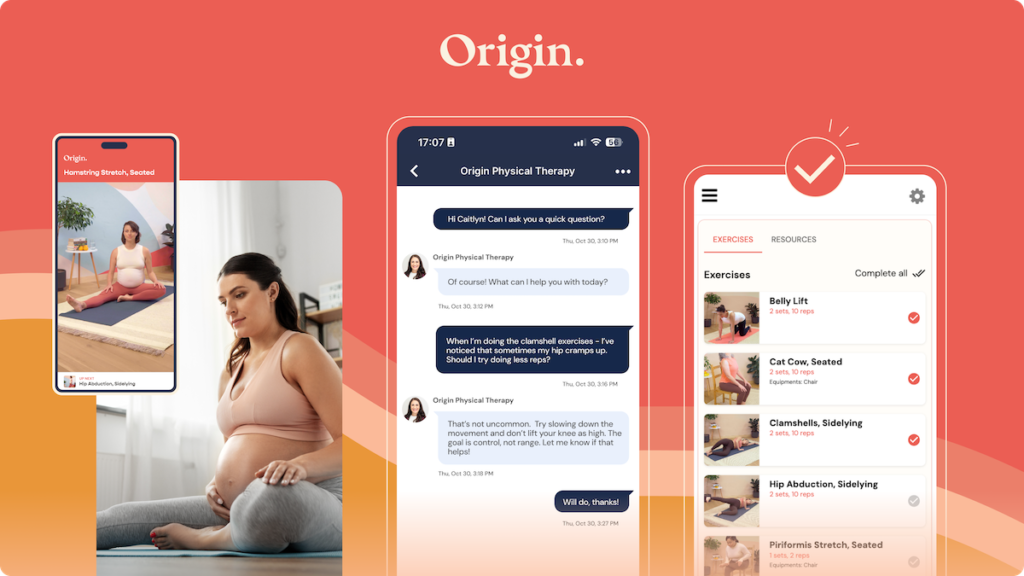
“We are AI-enabled, but not an AI-first platform,” Carmy said. “For our category, patients are often showing up with five issues at once, and doing that with an AI-first approach is very risky from a clinical outcome standpoint.”
The Series B will help Origin continue scaling what it has built over the past years.
“For too long, pelvic floor conditions were overlooked or ignored,” said Perry Clarkson, Managing Director at SJF Ventures. “Women seeking treatment had few care options, most of whom were not in network, and pelvic floor physical therapy was seen as ‘niche’ and thus underappreciated and underutilized by referring providers. Origin, via its hybrid in-person and virtual business model, is delivering life-changing care by making proven solutions to pelvic floor symptoms accessible to women across all 50 states and all stages of life.”