


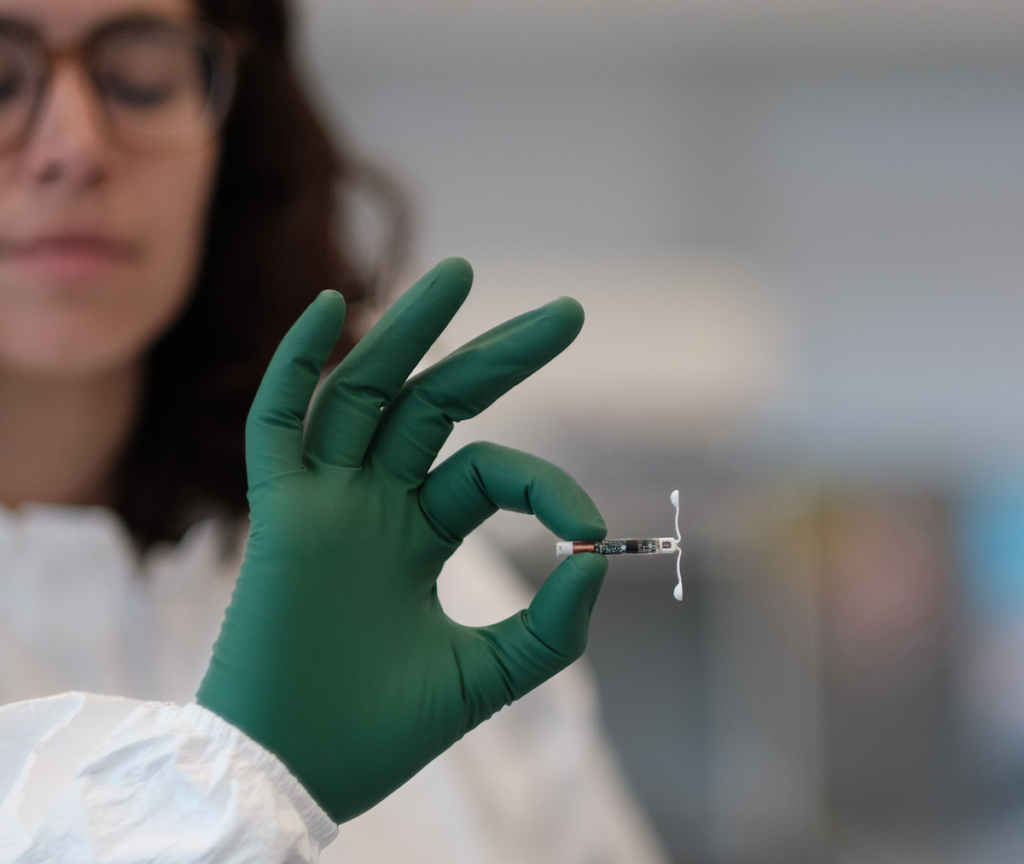
Verso Biosense, based in Oxfordshire, is developing a sensor-equipped intrauterine device designed to measure key physiological conditions inside the uterus – including temperature and oxygen levels – continuously over several days. The company says the technology could help unlock one of the least understood organs in the human body by providing data that has historically been impossible to collect.
The device mimics the shape of a conventional contraceptive IUD but contains miniature sensors that collect data continuously before transmitting it wirelessly for analysis. The most immediate application is fertility treatment: the device is being explored as a tool to monitor uterine conditions in women who have experienced failed IVF cycles, with the goal of identifying the conditions that give embryos the best chance of successful implantation.
“Medicine has made extraordinary advances in many fields but the uterus is still something of a black box,” said CEO Kate Rowley. “Our goal is to shine a light inside the uterine environment and gather the data needed to truly understand how it functions. Once we can see what’s happening in real time, we can start developing far more personalised and effective treatments.”
Scientific studies suggest that factors like temperature and oxygen levels influence embryo development, yet direct measurement inside the uterus has been extremely difficult. Over time, Verso Biosense hopes to build large-scale datasets revealing patterns across menstrual cycles – the kind of longitudinal data that simply doesn’t exist today.
“To really understand reproductive health we need longitudinal data – potentially monitoring biomarkers over months or years,” Rowley said. “That’s a huge engineering challenge when the device itself is extremely small.”
Future applications could extend beyond fertility to research into endometriosis, PCOS, uterine cancers, perimenopause, and menopause – positioning intrauterine monitoring as a new data layer for conditions that remain poorly understood due to the lack of direct physiological measurement.