

Around 54 million Americans have osteoporosis and low bone mass, placing them at increased risk for osteoporosis. Studies suggest that approximately 1 in 2 women and up to 1 in 4 men age 50 and older will break a bone due to osteoporosis.
Why it matters
Breaking a bone is a serious complication of osteoporosis, especially with older patients. Osteoporotic bone breaks are most likely to occur in the hip, spine or wrist, but other bones can break too. In addition to causing permanent pain, osteoporosis causes some patients to lose height. When osteoporosis affects vertebrae, or the bones of the spine, it often leads to a stooped or hunched posture.
Osteoporosis may limit mobility, which often leads to feelings of isolation or depression. Additionally, according the the Bone Health & Osteoporosis Foundation, 20% of seniors who break a hip die within one year from either complications related to the broken bone itself or the surgery to repair it. Many patients require long-term nursing home care.
Osteoporosis is responsible for 2 million broken bones and $19 billion in related costs every year. By 2025, experts predict that osteoporosis will be responsible for approximately three million fractures and $25.3 billion in costs annually.
But let's take a step back and start from the beginning... 👇
What is osteoporosis?
Bone is living tissue. This means that in order to keep bones strong, the body breaks down old bone and replaces it with new bone tissue. Sometime around age 30, bone mass stops increasing, and the goal for bone health is to keep as much bone as possible for as long as you can.
Osteoporosis causes bones to become weak and brittle, which increases the risk of fracture. As mentioned osteoporosis-related fractures most commonly occur in the hip, wrist or spine.
Osteoporosis affects men and women of all races. But white and Asian women, especially older women who are past menopause, are at highest risk. According to research “women start losing bone at an earlier age and at a faster rate than men. Women ≥ 50 years of age have a four times higher rate of osteoporosis and a two times higher rate of osteopenia, and they tend to have fractures 5 – 10 years earlier compared with men.”
While osteoporosis is mostly discussed in relation to ageing, bone loss can have a number of other causes. Those include:
- Autoimmune Disorders
- Digestive and Gastrointestinal Disorders
- Medical Procedures
- Cancer
- Blood Disorders
- Nervous System Disorders
- Hormonal Disorders
- Medication
- Pregnancy
- And more
How is osteoporosis diagnosed? The most common test for measuring bone mineral density is dual-energy x-ray absorptiometry (DXA). It is a quick, painless, and noninvasive test.
How is osteoporosis treated? Medications, healthy diet and weight-bearing exercise are recommended for prevention. Treatment for already established osteoporosis “may include exercise, vitamin and mineral supplements, and medications.”
Who's innovating?
And of course this wouldn't be a Femtech Insider Spotlight if we didn't include a couple of companies we've been watching in the bone health space! 👇
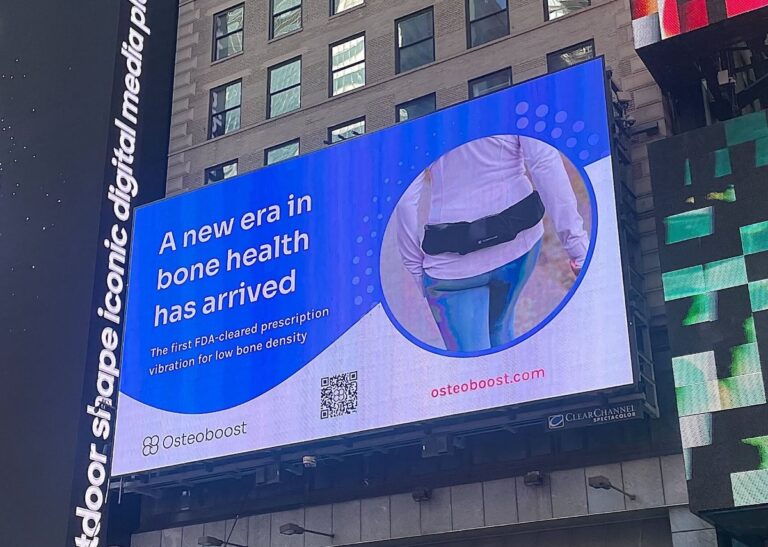
Bone Health Technologies‘ OsteoBoost is the first vibration belt specifically designed for the prevention of osteoporosis.
Juvent Health delivers clinically validated solutions to improve musculoskeletal health. Their patented Micro-Impact Platform has clinically demonstrated the ability to help users manage their osteoporosis and improve bone health non-invasively.
Solarea is a biotech company pioneering a “medical food” platform that’s based on harnessing the microbiome. One of their first products focuses on osteoporosis.
Last year women’s health pharma company Organon signed a licensing deal with Henlius, a Chinese biotech company, for biosimilars targeting osteoporosis and breast cancer.
Wellen Health is a fitness plarform for women with osteoporosis and osteopenia.
OsteoApp.ai's s proprietary, FDA cleared cloud-based SaaS screening service enables simple measurement of bone mineral density and early detection of osteoporosis by rapid automated analysis of standard X-rays.
Bainan Biotech is a biotech company focused on young and juvenile osteoporosis patients. It was founded on years of research exploring the connection between gut hormones and bone turnover.